
Showing up in AI search means your brand gets cited inside the answers ChatGPT, Google Gemini and Perplexity give to users. Artificial intelligence SEO, often called generative engine optimisation (GEO), is the work that makes this happen: structuring verified brand facts, earning mentions on trusted independent sites and writing clear, direct answers.
Search engines like Google no longer simply present ten blue links for every online enquiry and let you choose one of the highest-ranking. Instead, they turn information that’s often complex into short conversational snippets for today’s web users.
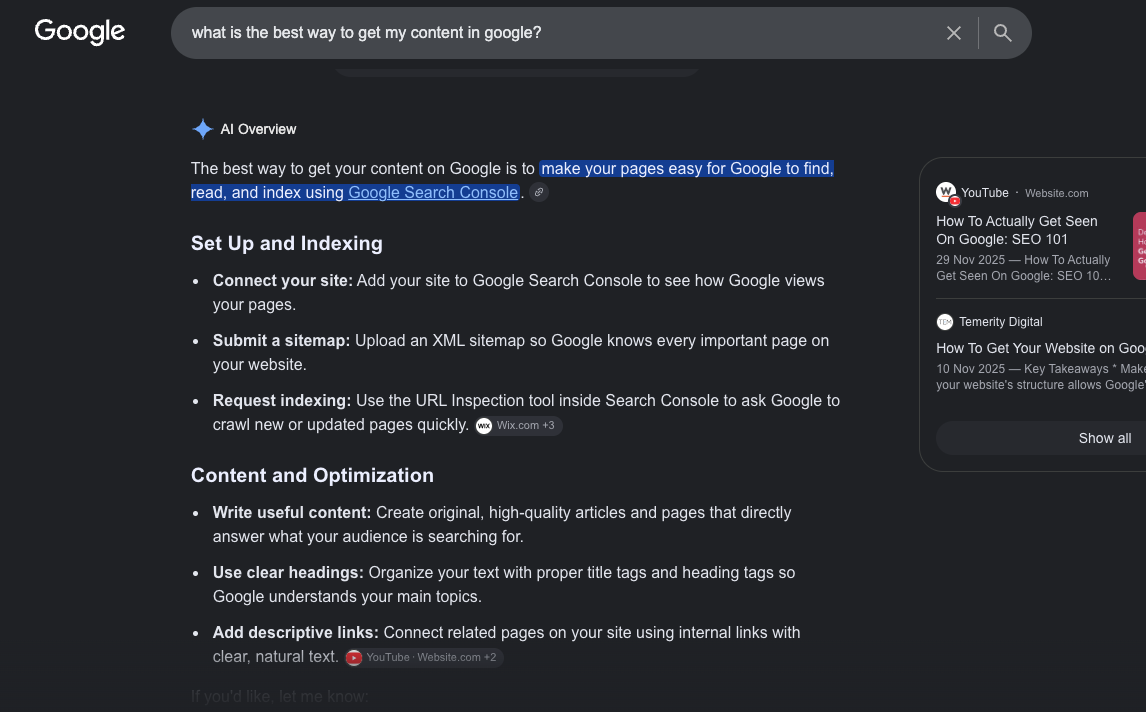
To remain visible across platforms like ChatGPT, Google Gemini, and Perplexity, brands must rethink their digital strategy. Achieving visibility in AI search requires Generative Engine Optimisation (GEO), a strategic framework designed to align content with how AI answer engines extract, synthesize, and cite information.
Unlike traditional rank tracking, showing up on these modern platforms depends on earning direct citations through high-authority digital mentions, structured schema markup and concise yet informative answers. Benchmark research on generative engine optimisation indicates that applying targeted GEO strategies can boost source visibility by up to 40% in tested generative engine environments, though specific outcomes vary across platforms like ChatGPT and Gemini.
Australian brands need to adapt their strategy to earn consistent direct citations at the point of purchase. Partnering with a dedicated and transparent digital marketing agency like Anchor Digital provides you with the technical foundation and creative direction to succeed in generative engine optimisation in Australia.
Understanding the Shift from Traditional Rank Lists to Generative Answer Engines
Some of the biggest changes from the shift from traditional search engine rankings to generative answer engines include:
- Direct answer extraction replacing standard blue links
- Large language models retrieving synthesised facts from verified sources
- Entity relationship mapping taking precedence over isolated search phrases
- Multi-source verification validating brand authority across independent channels.
The process of getting discovered by search engines has evolved rapidly in recent years. Traditional search engines matched user queries to page titles and keyword patterns across indexed websites. Generative answer engines operate differently. They analyse user intent, parse conceptual relationships and synthesise answers from multiple high-authority web sources at the same time.
Industry data indicates that zero-click searches now account for a substantial number of everyday user queries. Official developer guidance from Google Search AI optimisation documentation confirms that maintaining a clear technical structure remains essential, as generative features rely directly on core search indexing and crawling systems to process page data. When users receive a complete, synthesised response directly within an AI interface, organic click-through patterns change. Success no longer depends solely on holding the top position on a search results page. It relies on becoming the foundational source material that artificial intelligence cites in its answer.
A human-focused proofing process ensures that brand copy remains authoritative and readable for web users while also serving machine parsing engines. Artificial intelligence SEO depends on verified facts and clear brand positioning more than keyword repetition. The integration of modern generative engine optimisation principles in Australia allows businesses to capture attention at key stages of evaluation.
Adapting to this framework requires targeted strategies that align with how local consumers research products and services. Organisations that combine detailed technical schema with authoritative, human-led content secure a strong competitive edge. Comprehensive investments in search engine optimisation in Australia allow brands to build sustainable AI answer engine visibility across both traditional search engines and AI surfaces.
How Large Language Models Synthesise Brand Citations and Authority

Large language models process vast amounts of text data in order to generate relevant responses. Some AI search experiences use retrieval-augmented generation (RAG) or similar retrieval systems to bring relevant web information into the response. The sources and retrieval methods vary by platform, but these systems generally synthesise information across multiple trusted digital sources before presenting a statement.
The core element of this processing structure is called entity mapping. Systems identify a business as a distinct entity associated with specific industry topics, physical locations, key personnel and service offerings. Structured data, usually added as schema markup, helps automated systems read core details like your business name, services and locations.
Brand presence across reputable news publications, industry portals, and digital directories establishes strong verification signals. When reliable independent sources publish consistent information regarding your business, language models recognise your brand as an established authority in the industry. It takes a cohesive off-page presence, along with clear technical tagging, to be cited consistently in ChatGPT and Gemini.
Brands use AI search engine optimisation to make complex services easier for language models to interpret accurately. By implementing targeted artificial intelligence SEO practices, you keep your core brand narrative clear across every digital touchpoint. Retrieval systems look for clear context about who you are and what you do, alongside traditional signals like links. Brands that maintain verified, accurate data across independent corporate networks earn greater prominence when synthetic search platforms generate commercial recommendations.
Core Pillars of Modern Generative Engine Optimisation
Success in an AI-driven discovery environment requires a multi-faceted approach to digital publishing. Data collected from Stanford AI Index research highlights the rapid integration of artificial intelligence across the global economy, making clear answer structures essential as user interaction patterns evolve. Content teams need to focus on clarity, structural hierarchy and verifiable information to make it easy for machines to synthesise their web copy.
1. High-density factual messaging
Generative engines prioritise content that delivers clear facts without the surrounding fluff. Pages containing specific statistical data, verified research references and brief, to-the-point explanations earn higher extraction rates.
2. Structured data formatting
Your website’s technical architecture needs to clearly define your business details. Using precise JSON-LD schema markup for organisations, local services, articles and frequently asked questions (FAQs) helps AI systems correctly index relationships between entities.
3. Answer-focused heading hierarchy
Structuring content around natural conversational queries enables machines to identify direct answers immediately. Using headings that mirror exact consumer enquiries improves visibility inside AI Overviews and answer widgets.
4. Cross-platform brand consensus
A brand must maintain identical factual profiles across external platforms. Inconsistent address information, conflicting service descriptions or outdated company profiles create uncertainty for AI retrieval models.
Structured AEO search strategies establish your business as a primary reference point within your sector. Executing robust AI search engine optimisation helps structured data feeds align cleanly with editorial content. Combining technical rigour with compelling creative execution allows modern campaigns to perform efficiently. Exploring integrated growth options through a dedicated performance marketing agency in Australia can help secure your position in the competitive digital landscape while reinforcing your overall share of the search market.
Operationally, effective Answer Engine Optimization shifts the focus from traditional keyword density to verified entity authority. As generative engines evaluate web copy, they prioritize clear schema architecture, concise Q&A formatting, and independent third-party consensus to form their answers. By structuring your content around semantic clarity, expert attribution, and direct factual resolution, you ensure your brand is actively cited as the trusted recommendation when potential clients ask complex, high-intent questions. Partnering with a dedicated performance marketing agency in Australia ensures these technical frameworks are seamlessly executed, helping secure your category leadership and protect your overall share of search.
Practical Steps to Prepare Your Search Strategy for AI Discovery

To enhance your digital presence to meet modern search standards, you need to make clear, actionable adjustments. Here are some methods organisations can use to systematically update their web assets so that they’re fully compatible with modern generative models.
- Audit existing content for answer readiness. Evaluate key service landing pages to ensure core questions are answered directly within the first two paragraphs.
- Implement comprehensive schema architecture. Deploy detailed JSON-LD markup across all primary templates to define services, key personnel and corporate location details.
- Optimise for conversational search phrases. Identify long-tail, question-based search queries that target specific user pain points during commercial evaluation.
- Strengthen external brand mentions. Build high-quality digital relations across respected Australian publications to reinforce off-page authority signals.
- Maintain plain-language transparency. Establish responsible AI workflows in accordance with Australian Government artificial intelligence guidance. This ensures your content remains accurate and maintains proper human oversight, preventing falsehoods from springing up when deploying automated search assets.
Creating a modern artificial intelligence SEO strategy requires aligning your creative brand positioning with precise technical engineering. Deploying generative engine optimisation frameworks in Australia aligns your digital assets with automated indexing systems.
Based in Brisbane, Anchor Digital has the skills and experience to build an AI-ready search strategy for you. We operate without rigid lock-in contracts, earning our clients’ trust purely through transparent performance and measurable growth. As a hybrid digital marketing agency, we bring creative design, custom web engineering, and performance marketing together under one collaborative roof.
To audit your current search performance and prepare your brand for modern generative discovery, contact our strategy team today.
Frequently Asked Questions (FAQ)
What is the main difference between traditional SEO and generative engine optimisation?
Traditional SEO focuses on positioning web pages within rank-ordered lists of links for specific keyword queries. Generative Engine Optimisation (GEO) focuses on structuring brand facts, entities and content so AI engines can synthesise and cite your business directly within inline conversational answers. The transition towards AI search engine optimisation focuses on structuring facts to answer direct user queries. Implementing generative engine optimisation techniques in Australia helps local businesses capture high-intent traffic across conversational discovery tools.
How do AI search engines decide which brands to cite?
AI search engines evaluate entity authority through multi-source consensus, structured schema markup and content clarity. Systems favour sources that provide concise, verified facts supported by consistent mentions across independent, reputable websites. Maintaining strong off-page mentions alongside refined AEO search strategies increases the likelihood of citations across different digital media and channels.
Will traditional search engine optimisation become obsolete?
Traditional search engine optimisation principles remain essential because generative models rely on underlying search indices to crawl and retrieve web content. GEO builds directly upon established technical search foundations rather than replacing them entirely. Partnering with a skilled digital marketing agency can help make sure your technical setup supports both. Comprehensive artificial intelligence SEO initiatives keep your digital footprint visible across both traditional and AI-driven interfaces.
How quickly can a business expect results from AI search strategies?
Schema architecture and content updates can yield improved extraction in AI Overviews within several weeks. Accumulating off-page entity authority to secure regular citations across competitive conversational queries typically requires consistent effort over three to six months.
Does schema markup directly influence ChatGPT and Gemini answers?
Structured data can help search engines understand key business and page information more clearly, but it doesn’t directly guarantee visibility or rankings in AI platforms such as ChatGPT or Gemini. Clear schema tags reduce ambiguity during index parsing, making core brand data easily verifiable for machine engines.