
In digital marketing, we often find ourselves obsessed with the "what." What is the click-through rate? What is the bounce rate? What is the cost per acquisition? While these metrics are vital for measuring success, they only tell half the story. To truly master the art of digital growth, we have to look past the data points and into the human mind. We have to ask: Why?
Why does a user choose one button over another? Why does a specific headline resonate while another falls flat? Why do some brands feel inherently more trustworthy the moment you land on their homepage?
The answer lies in neuromarketing, the intersection of neuroscience and marketing. By leveraging conversion rate optimisation psychology, we can move beyond surface-level tweaks and start designing digital experiences that align with how the human brain actually processes information and makes decisions. At Anchor Digital, we believe that the most effective strategies are those built on a deep understanding of human nature.
The Science Behind The Click
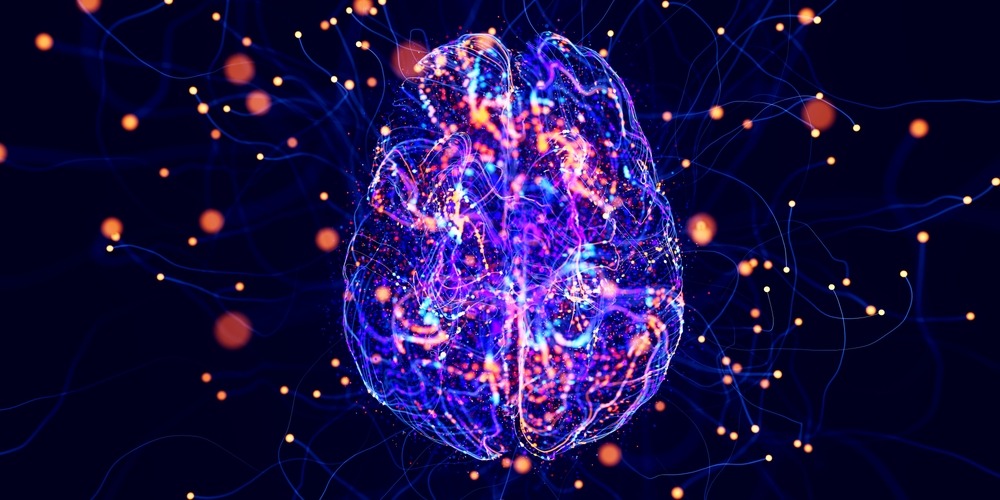
To understand the click, we first have to understand the brain. Despite our evolution, the human brain still operates on ancient software. Neuroscientists often point to the "Triune Brain" model, which categorises the brain into three distinct layers: the reptilian brain (survival), the limbic system (emotion), and the neocortex (rational thought).
The secret that many marketers miss is that most purchasing decisions aren't made by the rational neocortex. Instead, they are driven by the reptilian brain and the limbic system. These parts of the brain are fast, instinctive, and highly reactive to visual cues and emotional triggers. By the time the rational brain gets involved, the "decision" to buy or engage has often already been made; the neocortex simply steps in to justify the emotional choice with logic.
When we conduct user behaviour analysis, we aren't just looking at where a mouse moves on a screen. We are looking for evidence of these subconscious drivers. Neuromarketing teaches us that the brain is a cognitive miser; it wants to spend as little energy as possible to achieve a result. Therefore, the "click" happens when the perceived value of the action outweighs the cognitive effort required to perform it. If your website feels "hard" to navigate, the reptilian brain senses a threat to its energy reserves and prompts the user to flee (bounce).
Understanding this biological hierarchy is the foundation of effective neuromarketing strategies. It allows us to stop guessing and start building websites that speak directly to the parts of the brain responsible for action.
Cognitive Biases That Influence Conversion Behaviour

Our brains use mental shortcuts, known as cognitive biases, to make decisions quickly. These biases are hardwired into our subconscious and play a massive role in how we interact with digital interfaces. Integrating cognitive bias in web design isn't about manipulation; it’s about aligning your presentation with the natural "short-circuits" of the human mind to create a smoother path to conversion.
The Power of Social Proof
Humans are inherently social creatures. When we are uncertain, we look to others to determine the correct behaviour. This is why testimonials, "Best Seller" tags, and "Join 10,000 others" calls to action are so effective. Neurologically, social proof reduces the perceived risk of a transaction, soothing the survival-focused reptilian brain.
Loss Aversion and Scarcity
The pain of losing is psychologically twice as powerful as the joy of gaining. This is the heart of FOMO (Fear Of Missing Out). When a user sees "Only 2 left in stock" or "Sale ends in 3 hours," their brain shifts from a state of evaluation to a state of urgency. The threat of loss triggers a biological response that demands immediate action, often bypassing the rational filters of the neocortex.
The Anchoring Effect
The first piece of information a user receives, the "anchor", sets the tone for everything that follows. If a customer sees a premium package priced at $2,000 first, a $500 package suddenly looks like a bargain. By strategically placing "anchors" in your pricing tiers or service descriptions, you influence the perceived value of your offerings.
The Zeigarnik Effect
This principle states that people remember uncompleted tasks better than completed ones. In conversion rate optimisation psychology, this can be applied through progress bars in checkout flows or multi-step forms. Once a user starts the process, their brain creates a "loop" that it feels a biological need to close, significantly increasing the likelihood that they will finish the transaction.
Designing For Attention, Trust, and Action

Visual design is the primary language of the subconscious. Before a visitor reads a single word of your copy, their brain has already formed an opinion about your brand’s credibility and relevance based on visual cues.
When implementing cognitive bias in web design, we must focus on "Visual Salience", how much an object stands out from its surroundings. Our eyes are naturally drawn to contrast, faces, and movement. A high-converting landing page uses these elements to create a visual hierarchy that guides the eye exactly where it needs to go. For example, using a human face looking toward your CTA button is a classic neuromarketing tactic; our brains are hardwired to follow the gaze of others.
Trust is another neurological hurdle. The "Amygdala" is the brain's alarm system, constantly scanning for signs of danger or dishonesty. To lower these defences, your design must signal safety. This is achieved through:
- Consistency: Predictable layouts and branding that reduce "cognitive load."
- Authority Signals: Displaying industry certifications or well-known partner logos.
- Professionalism: High-quality imagery and clean typography that signal a high level of "fitness" and reliability.
By conducting detailed user behaviour analysis, we can identify "friction points" where the design might be confusing the brain’s processing, causing users to hesitate. Removing this friction is often the fastest way to see a jump in conversion rates.
Applying Neuromarketing Insight to Optimised Conversion Rates

So, how do we turn these psychological theories into tangible business results? The application of neuromarketing strategies requires a shift from "we think this looks good" to "we know this works because it aligns with human biology."
The first step is deep-dive research. Use heatmaps, session recordings, and eye-tracking data to identify where the brain gets stuck. Is the primary CTA competing with three other buttons? Is the "anchor" price too high, causing immediate sticker shock? Are there too many choices, leading to "analysis paralysis"?
Next, formulate hypotheses based on psychological principles. For example, if you notice a high drop-off on a lead-gen form, it might be hypothesised that the "cognitive load" is too high. The solution might be to break the form into smaller chunks (the Zeigarnik Effect) or to add trust signals, such as a "Privacy Guaranteed" badge near the submit button, to appease the amygdala.
Successful conversion rate optimisation psychology is iterative. Test these changes using A/B testing to ensure that the psychological nudge is actually translating into more clicks. It’s a blend of high-level strategy and granular data analysis, a combination that ensures your digital presence isn't just a brochure, but a high-performing conversion engine.
The ultimate goal is to create a "Frictionless Path to Purchase." When a website is designed with the brain in mind, the user feels a sense of "fluency." They don’t have to think; they just do. That is the power of neuromarketing.
Get More Customers Clicking and Converting With Anchor
Cracking the code of human behaviour is the key to unlocking exponential growth. At Anchor Digital, we don’t just build websites; we craft strategic digital experiences rooted in the science of how people think, feel, and act. By combining rigorous user behaviour analysis with cutting-edge neuromarketing strategies, we help brands move beyond basic CRO to achieve meaningful, long-term results.
If you are ready to stop guessing and start understanding the "why" behind your customers' actions, our team is here to help. We specialise in developing a holistic digital strategy that aligns your business goals with the needs of your audience. Whether you need to refine your brand’s voice through expert content marketing or overhaul your entire conversion funnel, we have the tools and the psychological insights to make it happen.
Your customers' brains are already making decisions, so make sure they’re choosing you. Get in touch with us today to start your journey toward a more psychological, more profitable, and more effective digital presence. Let’s turn those insights into action and those clicks into loyal customers.